Energy & blood sugar · Digestion · Plant omega-3
Chia seeds: the Aztec seed that turns into gel and softens the sugar spike
What the research says about Salvia hispanica, its soluble fiber and plant omega-3, how much to eat, and the one mistake that can send you to the emergency room.

By Mariana Farias, Founder & Editor of Las Recetas de mi Abuela · Updated November 4, 2026
Fact-checked against USDA FoodData Central, the NIH Office of Dietary Supplements (ODS) and peer-reviewed studies in PubMed. Educational content — not medical advice.
Key takeaways
- Two tablespoons of chia give about 8 grams of fiber — more than a quarter of what most adults need in a day.
- Chia is one of the richest plant sources of ALA omega-3; one tablespoon covers the daily adequate intake, though the body converts little of it to EPA and DHA.
- In clinical studies, adding chia to a carbohydrate meal reduced the post-meal blood sugar spike and increased fullness.
- Always soak chia before eating it. Dry seeds swallowed with water have expanded and blocked the esophagus.
Long before chia puddings filled café menus, Mexican grandmothers were stirring a spoonful of chia into a pitcher of agua de limón or agua de jamaica and letting the little seeds swell into a soft gel. Chia was a staple crop of the Aztecs, offered as tribute alongside corn and beans. Today it is sold as a "superfood". The science behind it is real, but more modest — and more interesting — than the marketing.
What are chia seeds?
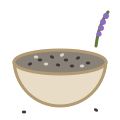
Chia seeds come from Salvia hispanica, an annual plant of the mint family (Lamiaceae) native to central and southern Mexico and Guatemala. Its tall stems end in spikes of small purple flowers, each producing tiny oval seeds, black-gray or white. The name comes from the Nahuatl chian, meaning "oily", and some historians believe the state of Chiapas takes its name from it.
The secret of chia is its seed coat: when it touches liquid, it releases a mucilage that wraps each seed in a clear gel and can absorb many times the seed's weight in water.
Nutrients and active compounds
- Fiber and mucilageAbout 34 g of fiber per 100 g. Most is insoluble, but the gel-forming mucilage acts as soluble fiber that slows digestion.
- Alpha-linolenic acid (ALA)A plant omega-3 fatty acid that makes up roughly 60% of chia's oil. It is essential: the body cannot make it.
- Protein and mineralsAbout 17% protein, plus calcium, magnesium, phosphorus and iron in amounts that matter in a normal serving.
- PolyphenolsChlorogenic acid, caffeic acid, rosmarinic acid and quercetin, which protect the oil from going rancid and add antioxidant activity.
What science says about chia
1. Softening the blood sugar spike Moderate evidence
In controlled studies, healthy volunteers who ate white bread baked with chia had a smaller rise in blood sugar after the meal than with plain bread, and the effect grew with the dose of chia. In another study, chia added to a sugary drink reduced the glucose spike and kept people feeling full longer. The likely reason is the gel: it slows how fast carbohydrates are digested and absorbed. In a 12-week trial in people with type 2 diabetes, chia also lowered blood pressure and an inflammation marker. It does not replace diabetes treatment, but it is a smart addition to carbohydrate-rich meals.
2. Digestion and regularity Good evidence for fiber
Dietary fiber adds bulk and water to stool and feeds beneficial gut bacteria; this is well established for fiber in general. Chia is an easy way to raise fiber intake, but increase it gradually and drink enough water — too much fiber too fast causes gas and bloating, and fiber without water can worsen constipation.
3. Plant omega-3 Established nutrient, limited conversion
According to the NIH Office of Dietary Supplements, adults need about 1.1 to 1.6 grams of ALA a day, and one tablespoon of chia provides around 2 grams. However, the body converts only a small fraction of ALA into EPA and very little into DHA, the omega-3s found in fish. Studies show chia raises blood ALA and EPA, but not DHA. Chia is a good plant source, not a substitute for fish oil if your doctor recommended it.
4. Weight loss Not supported
Chia's fiber increases fullness, but trials have not shown that adding chia to the diet by itself leads to weight loss. Remember it is calorie-dense: two tablespoons have about 115 kcal.
5. Heart health Limited evidence
Small trials report modest reductions in blood pressure, and diets rich in fiber and ALA are linked to better heart health in large population studies. Direct evidence that chia itself prevents heart disease is lacking.
Botanical and nutrition facts
| Scientific name | Salvia hispanica L. |
|---|---|
| Family | Lamiaceae (mint family) |
| Part used | Seeds, whole or ground |
| Origin | Central and southern Mexico and Guatemala |
| Main components | Fiber and mucilage, ALA omega-3, protein, calcium, magnesium, polyphenols |
| Flavor | Very mild, slightly nutty; takes on the flavor of the liquid |
| Nutrient | Per 100 g | Per 1 tbsp (12 g) |
|---|---|---|
| Energy | 486 kcal | 58 kcal |
| Dietary fiber | 34.4 g | 4.1 g (≈15% DV) |
| Protein | 16.5 g | 2.0 g |
| Total fat | 30.7 g | 3.7 g |
| ALA omega-3 | 17.8 g | 2.1 g |
| Calcium | 631 mg | 76 mg (≈6% DV) |
| Magnesium | 335 mg | 40 mg (≈10% DV) |
| Phosphorus | 860 mg | 103 mg |
| Iron | 7.7 mg | 0.9 mg |
Source: USDA FoodData Central (SR Legacy, "Seeds, chia seeds, dried"). DV = Daily Value for adults (fiber 28 g, calcium 1,300 mg, magnesium 420 mg). Values are rounded.
Dosage calculator
How much chia should I use?
Choose a preparation and how many servings you want. The quantities adjust automatically.
👵 Grandma's agua de limón con chía
- Stir 1 tablespoon of chia seeds into 1 glass (240 ml) of water. Stir again after 2 minutes so they don't clump.
- Let it rest at least 15 minutes, until each seed is wrapped in gel.
- Add the juice of half a lemon and, if you like, a teaspoon of honey.
- Drink it with a meal rich in tortillas, rice or bread to help soften the sugar spike.
Precautions and contraindications
🟢 Generally safe
- 1–2 tablespoons (12–25 g) of soaked chia a day for most adults.
- Children and pregnant women in normal food amounts, always well soaked.
🟡 Ask your doctor first
- Diabetes medication or insulin: chia can lower post-meal blood sugar — monitor your levels.
- Blood pressure medication: chia may add a small effect.
- Chronic kidney disease: chia is rich in phosphorus and potassium.
- Irritable bowel or inflammatory bowel disease: increase fiber slowly, as it can cause gas, bloating or cramps.
🔴 Avoid
- Eating dry chia seeds followed by water: they can swell in the esophagus and block it. Always soak them first.
- Chia if you have trouble swallowing (dysphagia), a narrowed esophagus or a history of food getting stuck.
- Chia if you are allergic to it (rare; possible cross-reactions with sesame or mustard).
Frequently asked questions
How much chia should I eat per day?
For most adults, 1 to 2 tablespoons (about 12 to 25 grams) of soaked chia a day is a common amount. That provides 4 to 8 grams of fiber and 2 to 4 grams of ALA omega-3. Increase it gradually and drink enough water.
Why should chia seeds be soaked?
Dry chia seeds can absorb many times their weight in liquid. In a reported case, a person who swallowed a spoonful of dry chia followed by water developed a gel plug that blocked the esophagus. Soaking them for at least 15 minutes prevents this.
Does chia help control blood sugar?
Clinical studies show that adding chia to a carbohydrate-rich meal reduces the post-meal blood sugar spike and increases fullness. It is a helpful addition to meals, but it does not replace diabetes medication.
Is chia a good source of omega-3?
Chia is one of the richest plant sources of ALA omega-3, and one tablespoon meets the daily adequate intake. The body converts only a small amount of ALA into EPA and DHA, so chia is not a replacement for fish or fish oil when those are recommended.
Does chia help you lose weight?
Chia increases fullness, but studies have not shown that it causes weight loss on its own. It is calorie-dense, about 58 kcal per tablespoon, so measure your portions.
+ 
Perfect pairing
Chia + flaxseed
The two gel-forming seeds of grandma's kitchen. Flax adds lignans and needs grinding to be absorbed — learn how to prepare it and how much water to drink with it.
Read the flaxseed guide →Keep reading
More ingredients from grandma's kitchen
 CloveSyzygium aromaticum
 LemonCitrus limon
 Ceylon cinnamonCinnamomum verum
 ChamomileMatricaria chamomilla
 GingerZingiber officinale
 TurmericCurcuma longa
 GarlicAllium sativum
 OreganoOriganum vulgare
 RosemarySalvia rosmarinus
 Bay leafLaurus nobilis
 PeppermintMentha × piperita
 HibiscusHibiscus sabdariffa
 Aloe veraAloe barbadensis
 Star aniseIllicium verum
 ValerianValeriana officinalis
 Apple cider vinegarMalus domestica
FlaxseedLinum usitatissimum
 EucalyptusEucalyptus globulus
 Raw honeyApis mellifera
Sources
- U.S. Department of Agriculture. FoodData Central — Seeds, chia seeds, dried. fdc.nal.usda.gov
- NIH Office of Dietary Supplements. Omega-3 Fatty Acids — Fact Sheet for Health Professionals. ods.od.nih.gov
- PubMed — chia seeds and postprandial glycemia. pubmed.ncbi.nlm.nih.gov
- PubMed — chia in type 2 diabetes clinical trial. pubmed.ncbi.nlm.nih.gov
- PubMed — chia seeds and esophageal impaction. pubmed.ncbi.nlm.nih.gov
- PubMed — ALA conversion to EPA and DHA in humans. pubmed.ncbi.nlm.nih.gov
⚕️ This guide is for educational purposes and does not replace the advice of a doctor, dietitian or pharmacist. Read our full medical disclaimer.